Fare thee well, my friend.
Emily V (1964–2026) with her junior-prom date in 1981.

Fare thee well, my friend.
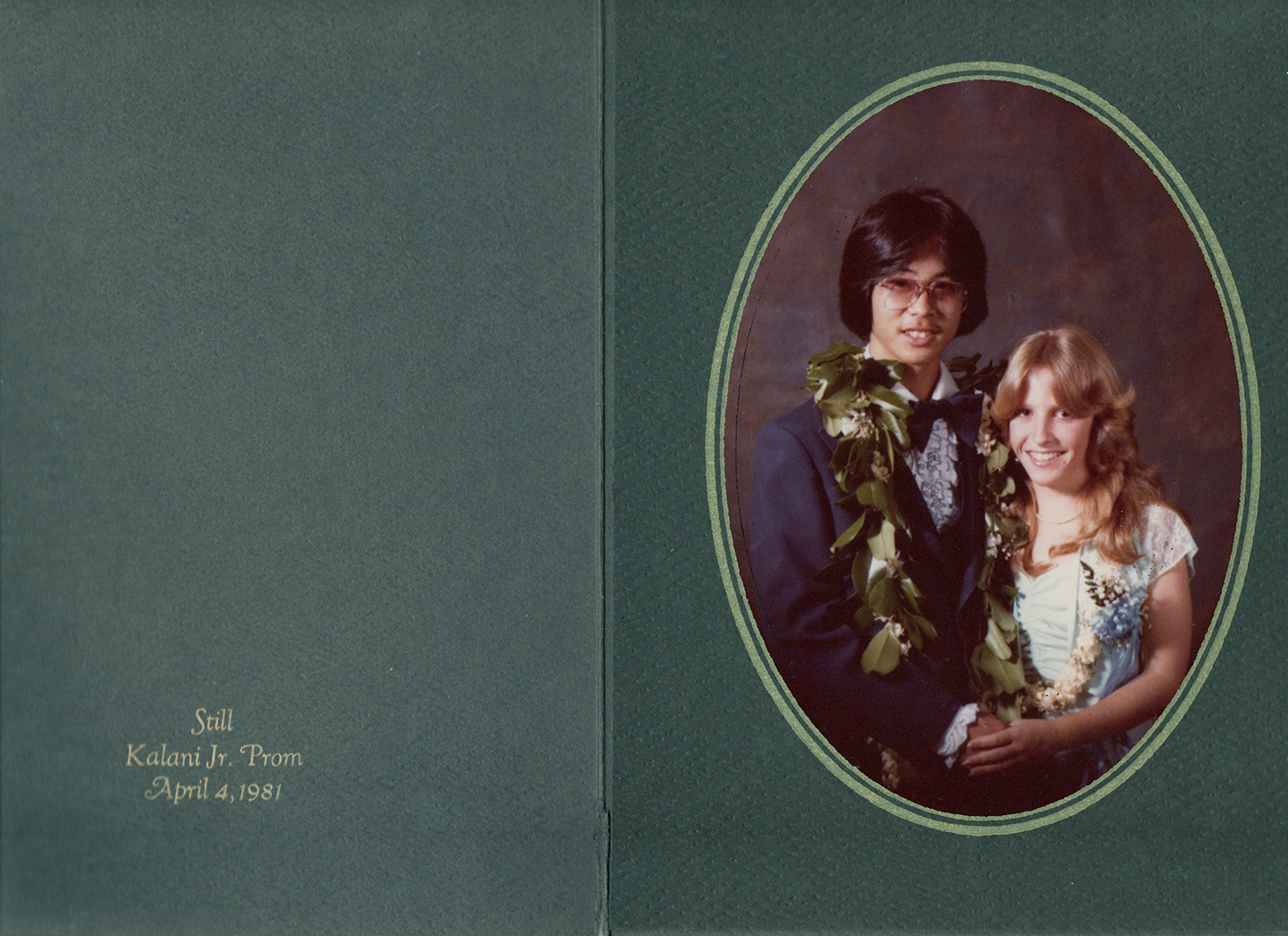
Emily V (1964–2026) with her junior-prom date in 1981.
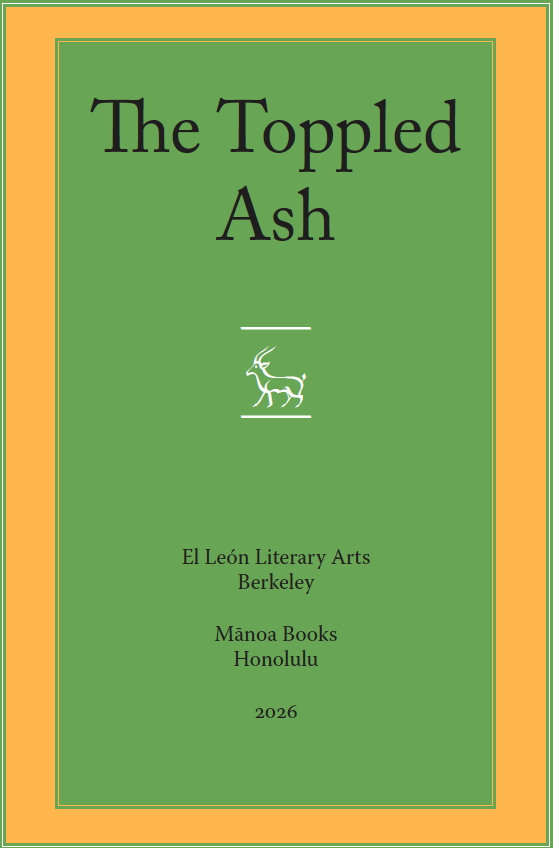
A preliminary cover for this book by Ms. Ryan, author of Green Island and Water Ghosts and recipient of the American Book Award and other distinctions.
Cover art is a painting by Henri Matisse.
Below are some of the options Pat provided the author of a 300-page novel set in a Scandinavian village during the nineteenth century. A gigantic tree and several animals—among them a stag, a wolf, and a hawk—figure in the story, and a group of four elderly women with mystical powers conduct mysterious rites and influence events.
The author had wanted to consider fleurons in addition to the one Pat selected when she typeset the book. Typefaces shown here are Type Embellishments, P22 Hieroglyphic, and LTC Fleurons.
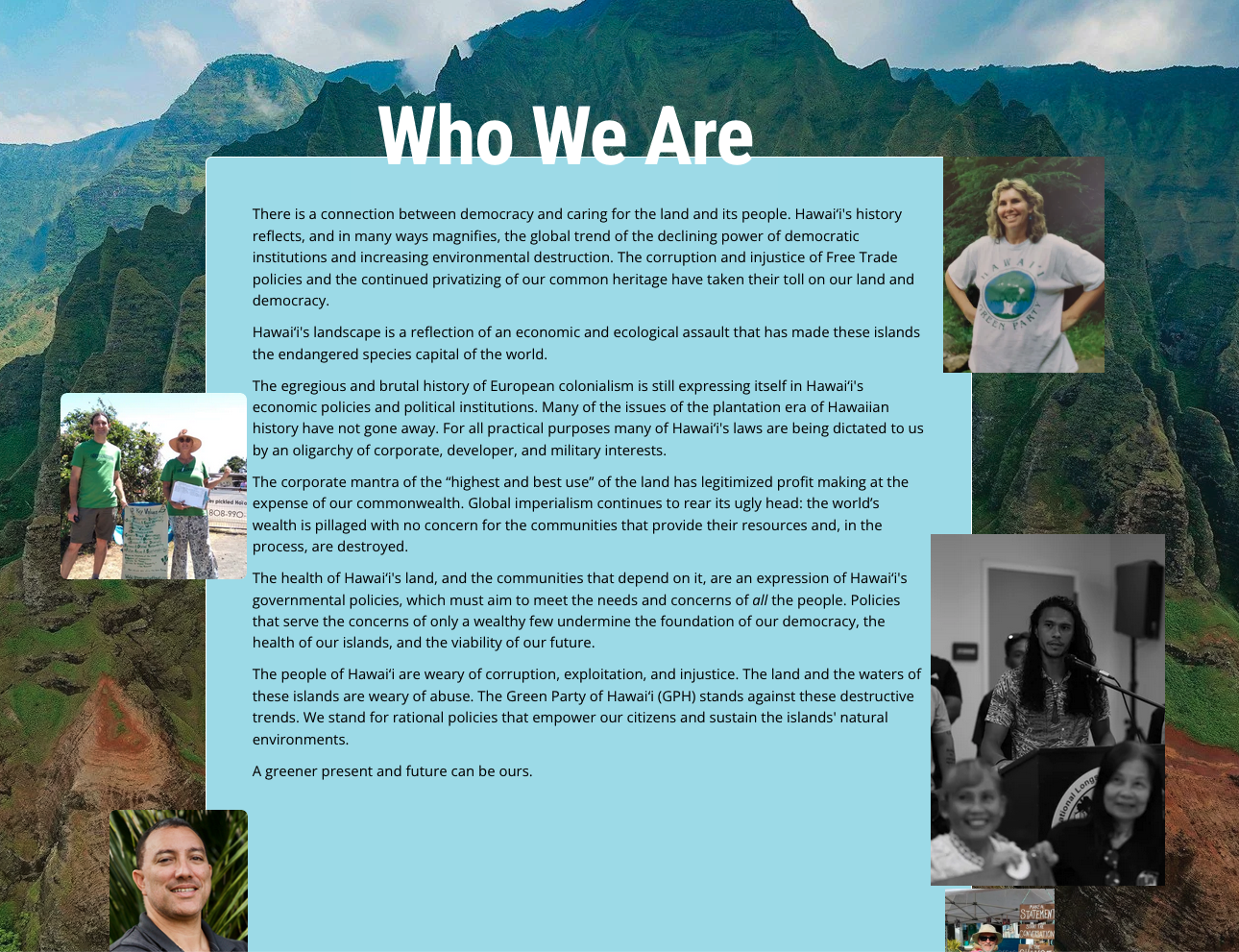
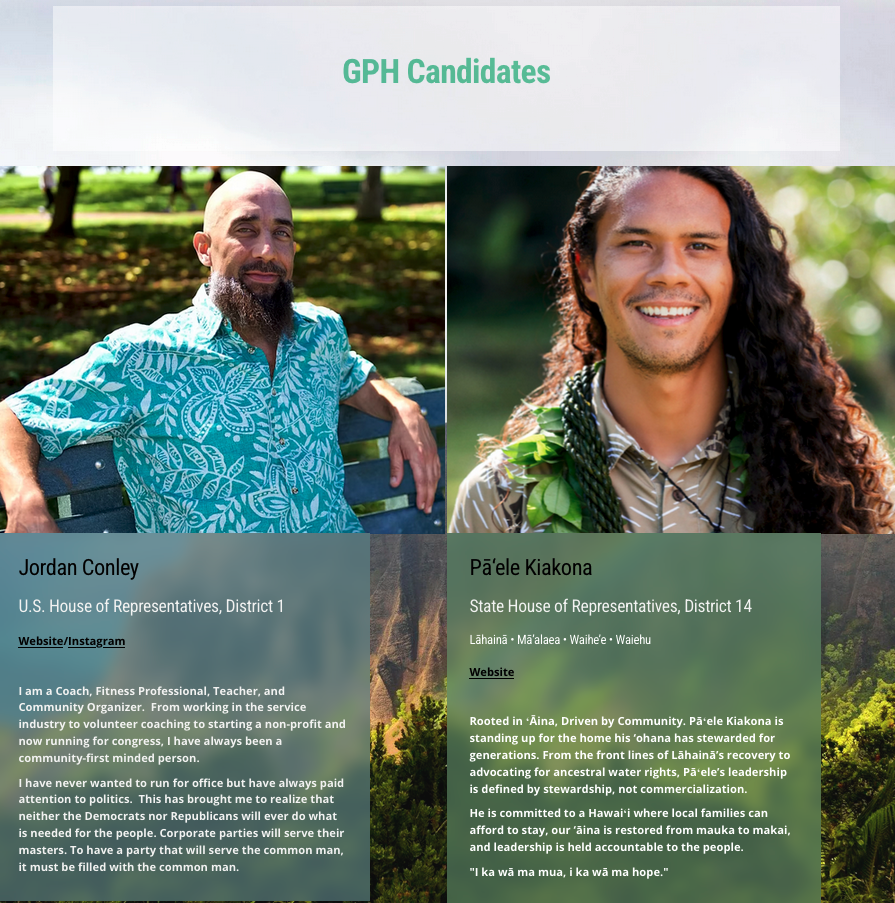
Asked to help the Green Party of Hawaii with its website, Pat has been working on it for the past month. Under the leadership of Sylvia and Susan, she has built several pages, adding to the work done by consultant Esmee Silverman.
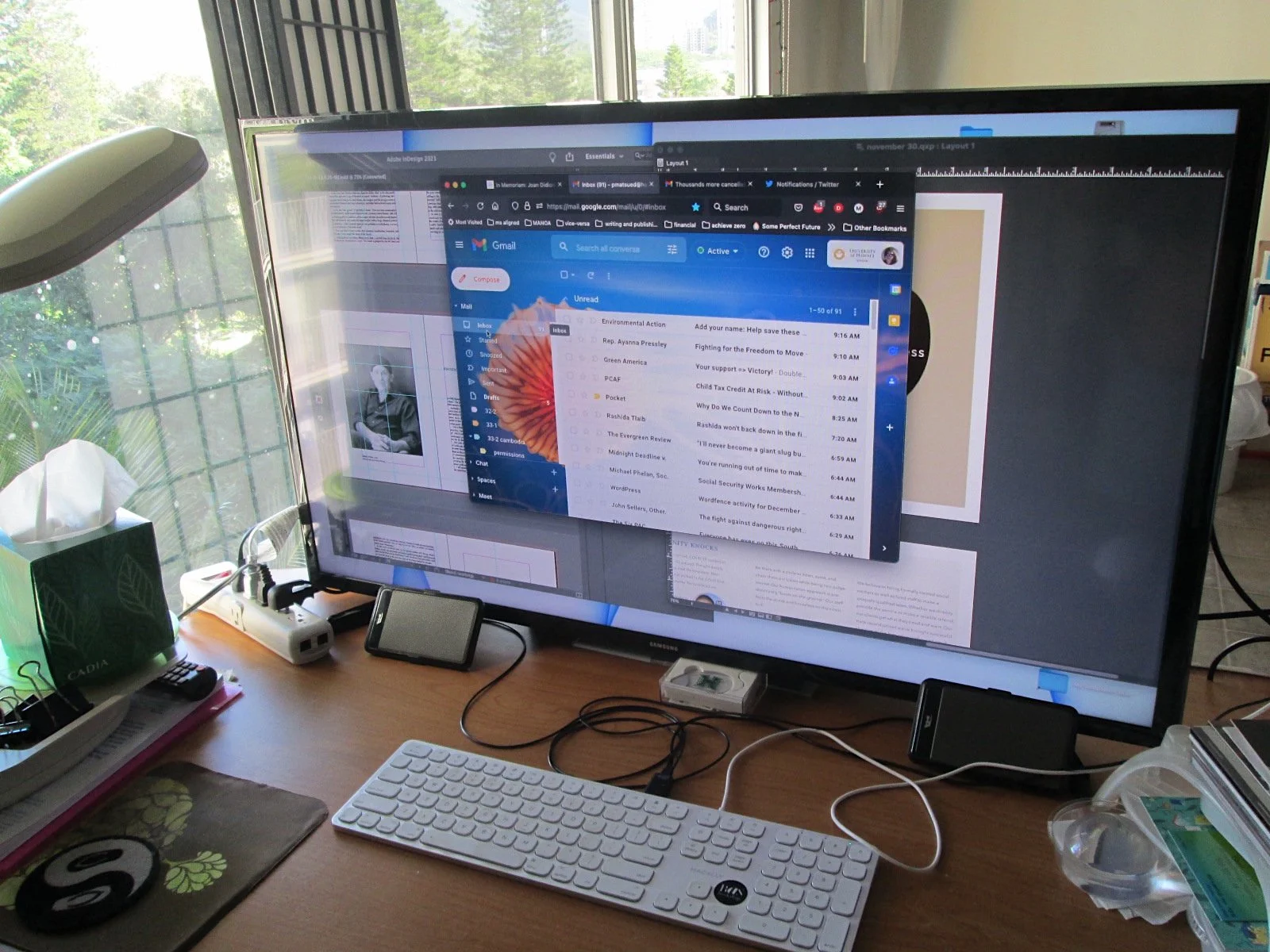
A forty-inch Samsung monitor that was a Christmas gift. Peak Services now has two desks, two monitors, two Mac minis, and one MacBook Air.
The following reflection on personal loss, creating, volunteering, and work was written by Pat Matsueda, head of Peak Services.
In December 2020, I lost my sister, Kathy, to a prolonged illness, and the new year started with attempts to accept her death. Then I lost Kikuyo, the mother of my mate, in April 2021. Losing Kikuyo, who was almost as much a mother to me as to her own children, compelled me to face the possibility of losing more people dear to me.
Events like these form the deep undercurrent of my life as a writer and creative person or—since I am frequently helping people to realize their own ideas or concepts—creative assistant. There is an urgency to make, create, and give before the time is gone.
Here is a list of things I worked on in addition to serving as a managing editor at my day job.
Winter 2020–2021
Interview with writer, editor, and publishing professional Rachel King for her Substack newsletter A Writer in Publishing.
“Illness as a Form of Existence,” an issue of the University of Hawai‘i ezine Vice-Versa, guest-edited by Tracy Robert and Liz Abrams-Morley.
Spring 2021
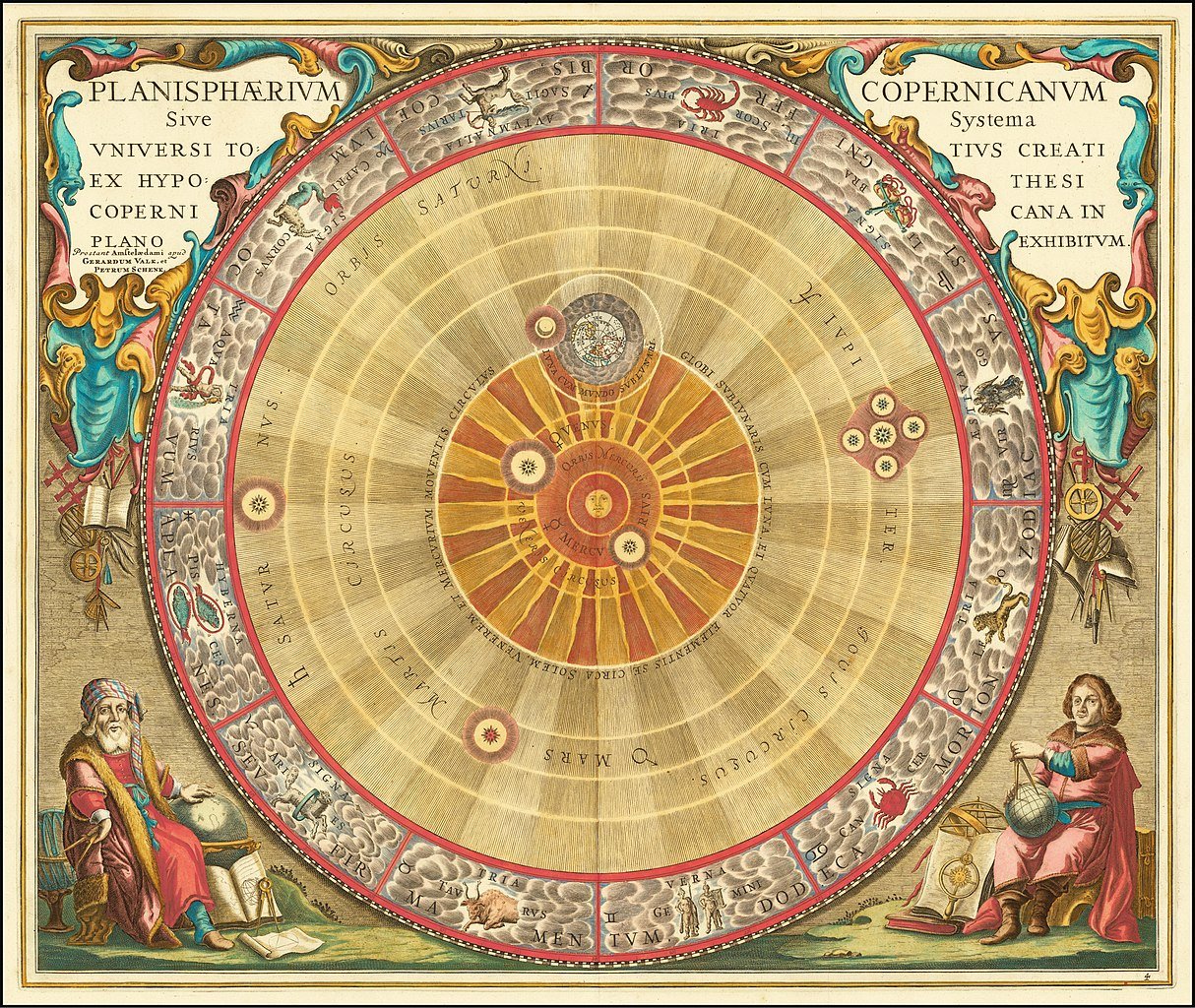
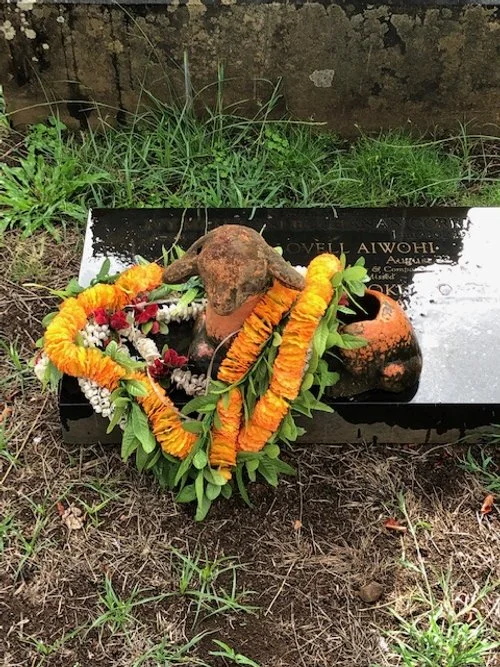
Bitter Angels, a chapbook of poetry published by El León Literary Arts and Mānoa Books. Dedicated to my sister, the book contains poems about death, love, violence, family, hope, and other subjects that form the armature of my reality. The title refers to the bitterness that I imagine angels feel in witnessing human tragedies. The cover is a composite of three images: a photograph of the Statue of Liberty, captured from the back, that I found at Flickr Commons; an astronomical chart produced by Copernicus; and a photograph of the Milky Way. The cover evolved over days of searching the internet for appropriate images, working intensively in Photoshop and QuarkXPress, and considering numerous elements, concepts, and alternatives. The last poem in Bitter Angels is about my coming across a headstone at O‘ahu Cemetery.
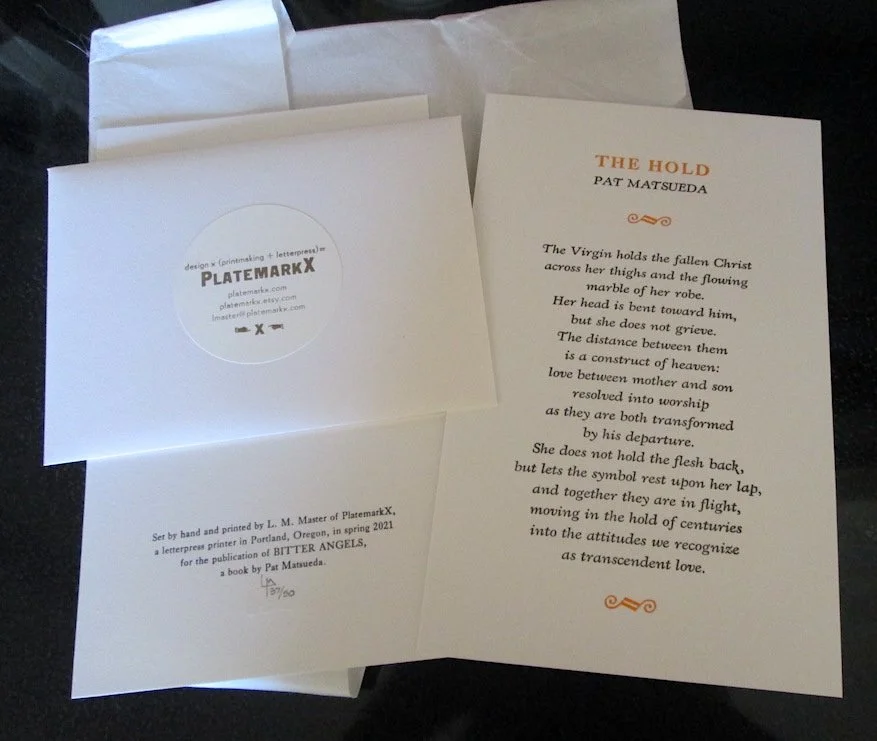
A broadside of my poem “The Hold” to mark the publication of Bitter Angels. After I came up with a draft, I approached print maker and book artist Laura Master, who, as the owner of letterpress studio Platemark X, suggested the typeface and paper. In March, Laura sent me fifty signed and numbered copies of the broadside, and I gave them to people who bought the book.
Fundraising and communications for Achieve Zero, a nonprofit organization that is based in Wahiawā and that provides services—such as finding shelter and rejoining communities—to houseless adults, teenagers, and families. Working with the board and staff, I raised funds and produced materials to help Achieve Zero spread its message and reach potential supporters.
Editing “The Edge of the World,” a novel in progress by a local architect named Mike. After meeting with him and our good friend Michael LaGory—who introduced us—I edited the first thirty-nine pages of the manuscript. With these pages and email responses from Michael and me, Mike decided to rewrite his book. “The Edge of the World” is about a soldier’s coming-of-age in the U.S. army and what he discovers about men, women, love, and morality while stationed at a remote military post in South Korea.
A review of Brian Komei Dempster’s poetry collection Seize (Four Way Books, 2020) for Manoa and the Ethical Imagination.
Summer 2021
“Mystery,” an issue of Vice-Versa. The short fiction was guest-edited by Jeffery Ryan Long. (Of course my favorite part of this issue is the long conversation I had with Gary Mawyer and Alex Mawyer about Kazuo Ishiguro’s Klara and the Sun.)
“The Dragon’s Tail,” a short story for One Humanity Writing Collective that I dedicated to Adam Rutsch and Challen Willensen and wrote with the help of teammates Lianda Burrows and Caylee Tierney. Adam and Challen are two of the people I’ve gotten to know through Friends of Trees, a Twitter group I started in May 2020.
Fall 2021
“Plant Grower with a Mission: An Interview with Manny Mellado,” an interview for Friends of Trees in Hawai‘i and Elsewhere. Manny is another friend made through the Twitter trees group.
Winter 2021–2022
Dangerous Fun: The Social Lives of Big Wave Surfers (University of Chicago Press, 2022) by Ugo Corte, an associate professor and scholar at the University of Stavanger in Norway. Recommended by our mutual friend Tom Farber, I was asked by Ugo to proofread the first pages of his book, which presents the North Shore surfing community as a subject of sociological research. The book is substantial—272 pages of typeset, composed pages, including seventeen pages of notes and references—and had to be proofed well in a short period (about three weeks). Ugo returned the page proofs to the production editor at UCP on January 13.
Reader’s report for “A Treasured Unimportance,” a book-length manuscript of fiction by Ben Schwartz.
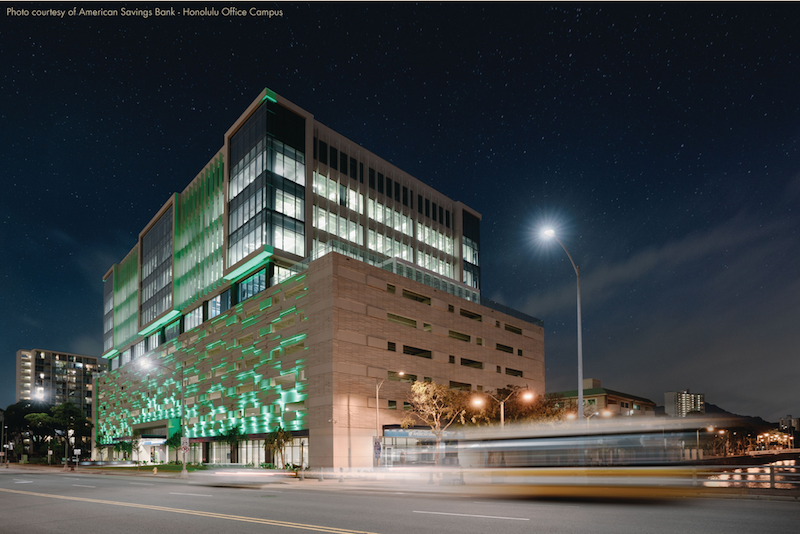
Last year, American Savings Bank unveiled its twelve-story headquarters in Chinatown, and there was much to-do about the project. Designed by architectural firm hiarchy 11p, it got a lot of press coverage, including generous shots of the building’s exterior and interior.
I was reminded of David Moldawer’s piece on the coffee situation at the offices of prospective employers when I saw pictures of the employee lounge. If Moldawer were to visit the coffee space, I think he’d be pleased with the setup.
Here are some of ASB’s photos of the project, called the first major construction project in downtown Honolulu in decades. It’s worth noting that the project was also seen as a significant development in the revitalization of an area with homeless camps and low-income housing.
I hope that someday greater employment and educational opportunities can be given the residents of an area that I consider part of my neighborhood.


Designed this business card for The Prickly Orchard. Founder Manny Mellado says his goal is to acquire seeds for endangered and critically endangered plants to breed for reintroduction into the wild.
The website is under construction and will be launched sometime in spring 2021. For now, visitors can learn about TPO—and see images of the beautiful and rare plants it is cultivating—on Twitter.
Peak Services recently completed an evaluation of a book manuscript by Casey Gushikuma. Here is an excerpt from the evaluation:
The Kumasogami (hereafter referred to as TK) is an engrossing collection of Japanese tales for a young audience.…The elements of Japanese history and culture were rendered with attention to detail and accuracy, and the conflict between religion based tribes and profit-based societies was captured well.
Most important perhaps is that TK encourages the development of a moral perspective—critical for young readers, especially in a world where exploiting people and natural resources for political or economic gain is all too common. By imbuing characters, including other creatures, with magical qualities, TK allows its readers to expand their sympathies and to see that virtuous acts have lasting power.

Matsuo Bashō's classic Oku no Hosomichi is now available in a new translation by Dennis Kawaharada. Titled Summer Grasses, Autumn Wind: An Illustrated Translation of Basho's Narrow Roads of the Deep North, the book has been issued in color and black-and-white editions.
Description from the Amazon.com page on the book:
"[Summer Grasses, Autumn Wind] is illustrated with color photos and Edo Period art and maps. The text includes a short biography and notes on literary, cultural, religious, geographical, and lunar-calendrical contexts, along with 262 notes explaining the details of references to these contexts. The 173 Illustrations include over 100 photographs taken on road trips between 2005–2017 documenting what the places and landscapes mentioned in the text look like today."
Peak Services assisted with the proofreading. Our thanks to Dennis Kawaharada for allowing us to work on this book.